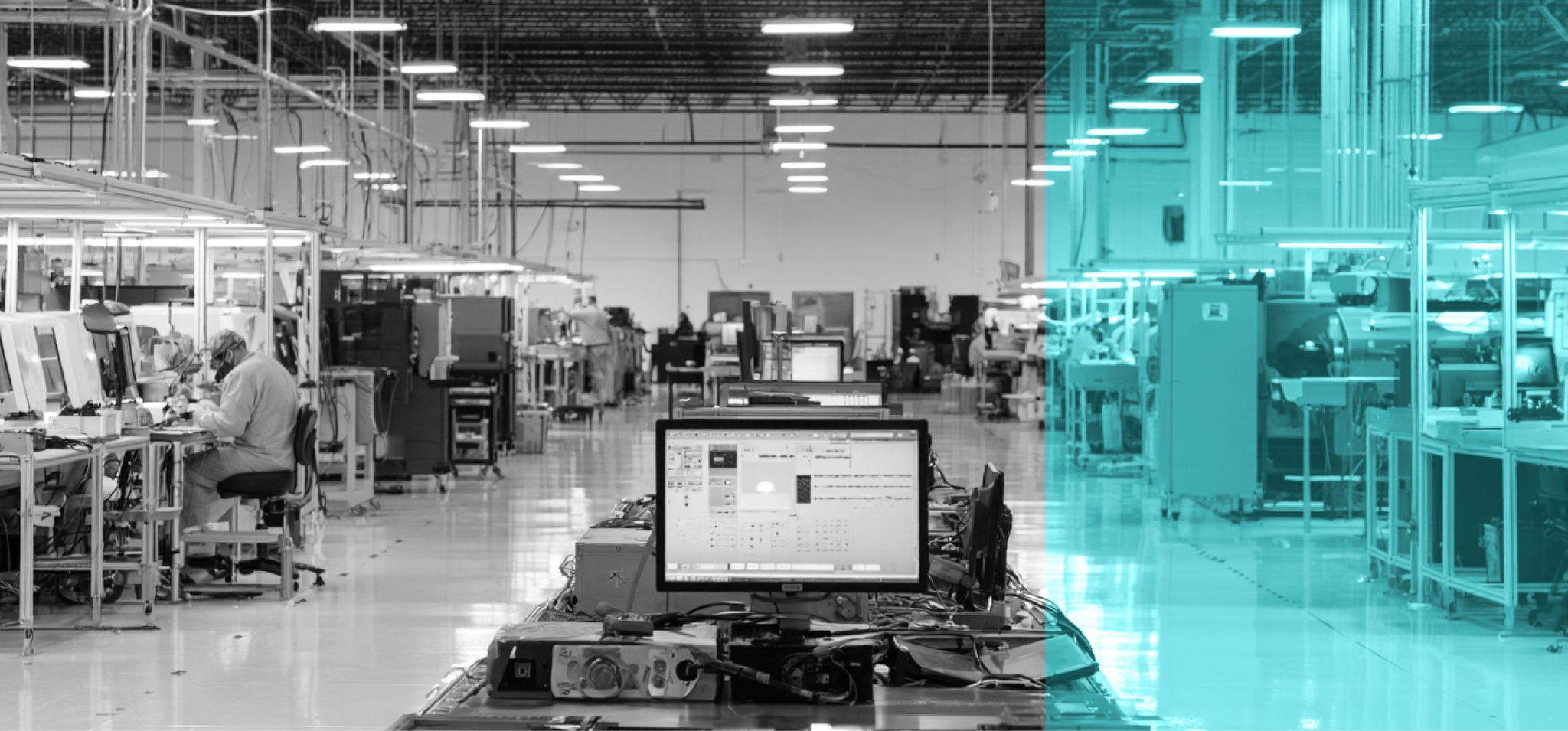
A global manufacturer of custom orthodontic devices, serving thousands of practices across the US, took complex custom orders by fax, phone, screenshot, and even hand-drawn PDF. Doctors had gotten used to this highly manual ordering UX, and business was suffering for it. We took a product-led approach to reimagining the quote to cash experience and modernizing the tech in parallel.
Key ideas
- Industry
- Medical device manufacturing, custom orthodontic and dental
- Challenge
- Ordering was extremely manual, with medical customers submitting specs in any manner they chose. This was hurting the bottom line, harming UX, and difficult to escape due to outdated purchasing app technology.
- 3Pillar offering
- Platform-driven App Modernization, Digital Products & Experiences. Product strategy, UX research, UI/UX, engineering, QA, infrastructure, delivery management.
At a glance
- Net-new ordering and invoicing platform, built from nothing
- Managed by 15 to 20 specialists across six disciplines at peak
- Measured business impact from reduction in remakes
Manual ordering was producing devices that the manufacturer had to (too often) build twice
A doctor fills in a prescription form by hand. Someone scans it, sometimes well, and it arrives in our client’s manufacturing queue. A technician then reads the handwriting and decides what it says. Most of the time the technician is right, and the order moves to the device manufacturing floor without issues.
But what if they read it wrong?
Or what if the doctor’s scribbled penmanship describing a dental implant’s custom needs were misleading or inaccurate?
“There were just too many potential errors in this old school process. Imagine you receive a scan from a doctor that’s a PDF with lots of handwriting. They chose to submit it that way, and your system allowed it. You might say, well, I believe this says this,” said Francisco Perez, Program Director at 3Pillar, “but, in fact, it was a completely different thing. What ends up happening is the wrong order is processed, and inevitably the doctor and their patient get an incorrect product.”
An incorrect product in the medical devices business is not a simple product return. It’s an expensive, custom device, already manufactured against specs that turned out to be guesswork, for a patient who still needs the right thing. In these unfortunate cases our client, the manufacturer, would then have to build the product a second time, eat the cost, and deliver late. Despite how correctable this was, it had become a sort of cost of doing business, normalized after years of operating that way.
Doctors sent cases however they liked and they liked it that way. Flexibility was real and it kept them coming back to order again. But flexibility was also the point at which ambiguity entered the system, and once it entered it did not resolve cleanly. Clearing it up meant a phone call, then another, then a judgment made by whoever was closest to the deadline.
“They spend too much back and forth to align specs, and at the end there’s still a risk of building up something incorrect,” Perez said. The manufacturer was paying twice over: once in the time it took to reach a confirmed order, and again on the orders that were confirmed wrong.
Led by 3Pillar, product research on both sides of the order showed where the risk actually sat
Our client did not want to sacrifice customer loyalty or order volume for the sake of simpler operations or QA processes. There were many potential fixes to the errors they were seeing, so 3Pillar interviewed both stakeholder groups playing part in the transaction before designing anything.
One stream went outward, to the people placing orders: individual doctors, the office staff who submit cases on their behalf, and representatives from the dental support organizations that manage practice buying in groups. The other went inward, to customer success, to the technical representatives who speak with customers daily, and to the people on the manufacturing floor working from whatever the intake queue gave them.
Both streams were examining the same question from opposite sides. Where does an order actually go wrong, and who finds out first?
The answer reframed the project. A structured ordering system that refused incomplete or contradictory cases was the obvious technical fix, and it was not the hard part. The hard part was that the customers placing those orders had spent years ordering however they liked, and a system that told them otherwise could easily read as a downgrade rather than an improvement. Practices that felt constrained would take their volume to a competitor still willing to accept a fax.
Even if you put a more streamlined process in place, you will have, for sure, a friction with existing and already-happy customers adopting a product.
The design question was therefore never whether to introduce friction, since order accuracy actually required it. It was where to place that friction, and how much of it a practice would tolerate before the platform began costing the business the customers it was built to serve. That judgment could not be reasoned out in the abstract, which is why both research streams ran before we got to work.
The manufacturer’s new, reimagined portal constrains ordering specifications for accuracy, but leaves everything else alone
The resulting principle was narrow and deliberate. Constrain the parts of an order required for the right thing to be manufactured, and leave every other part of the relationship untouched. And do this while (hopefully) elevating the real customer experience through more intuitive, trustworthy ordering.
3Pillar teams built a web portal where a doctor signs in and configures a case through a familiar decision tree designed completely for dental specialists. Select your options, don’t write out a request in prose.
The sequence starts with upper arch, lower arch, or both, then moves to a category such as a retainer or a class II correction appliance, and then to the parameters that genuinely vary from case to case. Whether the patient already has brackets, and whether those brackets are being kept or removed. Horseshoe or full palate. Three-on-three or two-on-two. Flat bow. Adjustment loops or none. It’s a dynamic flow where each selection narrows what the following question can be. So it’s not just easier, but also, a configuration that can’t really be manufactured is impossible to submit rather than merely discouraged.
Try the flow
Each answer unlocks the next question. The case can’t be submitted until every required choice is made.
Case record
- Arch
- Not selected
- Category
- Not selected
- Brackets
- Not selected
- Palate
- Not selected
- Adjustment loops
- Not selected
Choose an arch to start the case.
Simplified illustration of the constrained configuration flow. The production portal covers more options and renders the appliance visually as the doctor works.
We also built the ordering experience so that the medical device (“appliance”) takes shape visually on screen as the doctor works, which moves the moment of discovery.
An inaccurate selection becomes immediately apparent at the point it is made, not after device delivery. On the manufacturing side, a case now arrives as structured data rather than an image to be interpreted: submission date, patient, due-back date, status, every configured option, and any attachments.
The discipline was in what 3Pillar deliberately left open. Practices that prefer to send a plaster model still send a plaster model, and the platform accepts those analog cases alongside configured ones. “We made this process strict where we needed to be, but we still allow some behaviors that are less risk prone and preferred by certain practices,” Perez said.
We also integrated a payment gateway, fully designed for complex ordering by signed in, authorized buyers who aren’t paying with each individual order. Practices are invoiced on a cycle, monthly or at a set interval, and pay through the portal, which works closer to a line of business credit than a shopping cart. Building it that way required the ordering flow, the manufacturing status, and the billing cycle to agree at all times on what a case is and the state that it’s in.
Device remakes decreased, order volume rose
3Pillar continues to partner with the client to expand on the ordering platform and extend its use within the business, including AI-focused workflow initiatives now in discussion. Real, tangible business value from the changes we introduced here is what has opened that new door.
Business impact achieved via this new ordering experience
Average reduction in custom device remakes through constrained configurations and error prevention.
The new experience supports an astonishing 400% increase in portal revenue compared to the previous year.
Streamlined manufacturing intake
Cases now reach the manufacturing floor as structured, validated data for less translation and validation friction.
Enhanced operational efficiency
Orders are processed faster and with fewer errors while successfully maintaining customer loyalty and order volume.
This engagement was delivered through 3Pillar’s Digital Products & Experiences practice, which covers product strategy through to the engineering and infrastructure that keeps a platform running. For another view of what a multi-year product partnership looks like as a team scales up and then down, see Optimizing Healthcare Technology through Long-Term Partnership. Interested in discussing your own ordering or fulfillment platform? Contact 3Pillar here.